
Intel Shares Drop as AI Demand Outstrips Supply
- Jan 23
- 3 min read
Intel is struggling to meet demand for server chips utilised in artificial intelligence data centres. This challenge has led the organisation to forecast quarterly revenue and profit below market estimates. Following the announcement, shares dropped 13% in after-hours trading.
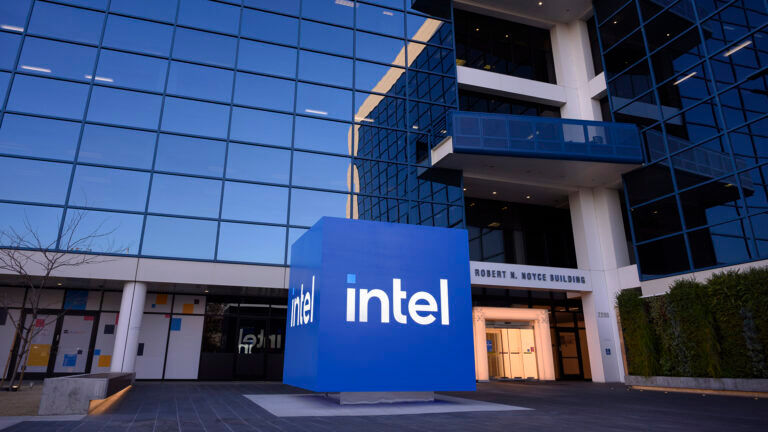
The forecast highlights Intel's difficulties in predicting global chip markets, where current products result from decisions made years ago. The company's shares had risen 40% in the past month.
Chief Executive Officer Lip-Bu Tan expressed disappointment. Tan stated, "In the short term, I'm disappointed that we are not able to fully meet the demand in our markets."
Intel was caught off guard by surging demand for server central processors that accompany AI chips. Despite operating factories at capacity, the organisation cannot keep up with demand, missing profitable data centre sales. This occurs while new PC chips squeeze margins.
The organisation forecasts current-quarter revenue between USD 11.7 billion and USD 12.7 billion. This contrasts with analysts' average estimate of USD 12.51 billion.

Intel also expects adjusted earnings per share to break even in the first quarter. This is lower than expectations of adjusted earnings of 5 cents per share. Investors and analysts had hoped rapid data centre buildouts would drive sales for Intel's traditional server chips.
These chips are often used alongside Nvidia's market-leading graphics processing units. Finance Chief David Zinsner noted that AI demand surprised some cloud-computing giants. Zinsner explained, "They were all a little bit caught off guard."
Cloud-computing giants had to scramble to upgrade aging fleets of chips because of an "erosion in networking performance." Zinsner also said Intel faces a lag time in changing the types of chips it makes. The company was not managing factories with the expectation that data-centre demand would change.
Tan has engineered a turnaround strategy focusing on cost cutting, eliminating management layers, and championing a fresh product road map. This follows years of missteps that impacted Intel in the fast-growing AI chip market and drained its finances.
Intel has held off on significant investment in its next-generation manufacturing process, known as 14A. The organisation is awaiting a large customer for this technology. Zinsner indicated investors would notice a spike in capital spending once a customer is secured.
Tan confirmed that two customers are evaluating the technical details of the 14A technology. Executives anticipate knowing by the second half of this year if external customers will use the technology. Zinsner also believes capital expenditure could remain steady, contrary to previous expectations of a decline.
Last year, Intel received several high-profile investments. These included USD 5 billion from Nvidia, USD 2 billion from SoftBank, and a U.S. government stake. Investor confidence in the company's revival has been high.
Michael Schulman, chief investment officer at Running Point Capital, commented on the situation. Schulman stated, "For investors, the key insight is that Intel's turnaround story remains supply-constrained rather than demand-constrained; a frustrating position that delays the financial recovery despite competitive products and strong customer interest."
Tan has also significantly reduced contract manufacturing ambitions. These ambitions were promoted by his predecessor, Pat Gelsinger. This move aims to shore up Intel's balance sheet after capital-intensive expansions impacted margins.
After a more than 60% drop in its share price in 2024, Intel's stock gained 84% in 2025. This significantly outperformed the benchmark semiconductor index's 42% rise.
The company has begun shipping its new "Panther Lake" PC chips. These are the first products made using Intel's 18A manufacturing technology. Analysts had expected the production ramp-up to negatively affect margins.
Only a small percentage of the chips printed via 18A have been good enough to make available to customers. Intel has stated its yields, or the number of good chips per silicon wafer, are improving monthly. Tan noted that 18A yields are in line with internal plans but "still below what I want them to be."
A global shortage of memory chips has increased their prices. This has made personal computers, a key market for Intel, more expensive. Zinsner expects available supply to be at its lowest levels in the first quarter, with improvement anticipated in the second quarter.
Intel has consistently lost market share in the PC sector to rivals AMD and chip blueprint designer Arm Holdings.
Intel's shares dropped 13% after the organisation forecasted quarterly revenue and profit below market estimates.
The company is struggling to meet surging demand for server chips used in artificial intelligence data centres.
Chief Executive Officer Lip-Bu Tan has initiated a turnaround strategy focusing on cost cutting and a new product road map.
Source: REUTERS


Comments